A flat-top griddle is basically a giant carbon-steel pan, and the black, glossy surface you cook on isn't paint; it's seasoning, thin layers of oil baked past their smoke point until they bond to the steel. Clean it right and that surface gets better every month. Clean it wrong (or not at all) and you get the three classic griddle failures: sticky gunk, flaking carbon, and orange rust.
The good news, confirmed by thousands of Blackstone and Camp Chef owner threads: the difference between a griddle that lasts fifteen years and one that's a rust farm by spring is about five minutes per cook. Here's the routine, the deep clean for when you skipped the routine, and the rescue plan for when you skipped everything.
The 5-Minute After-Cook Routine
The single most important rule: clean the griddle while it's still hot. Burnt-on residue that scrapes off in seconds at 300°F becomes cemented concrete once the steel cools. Burners off, spatulas down, and go straight into this:
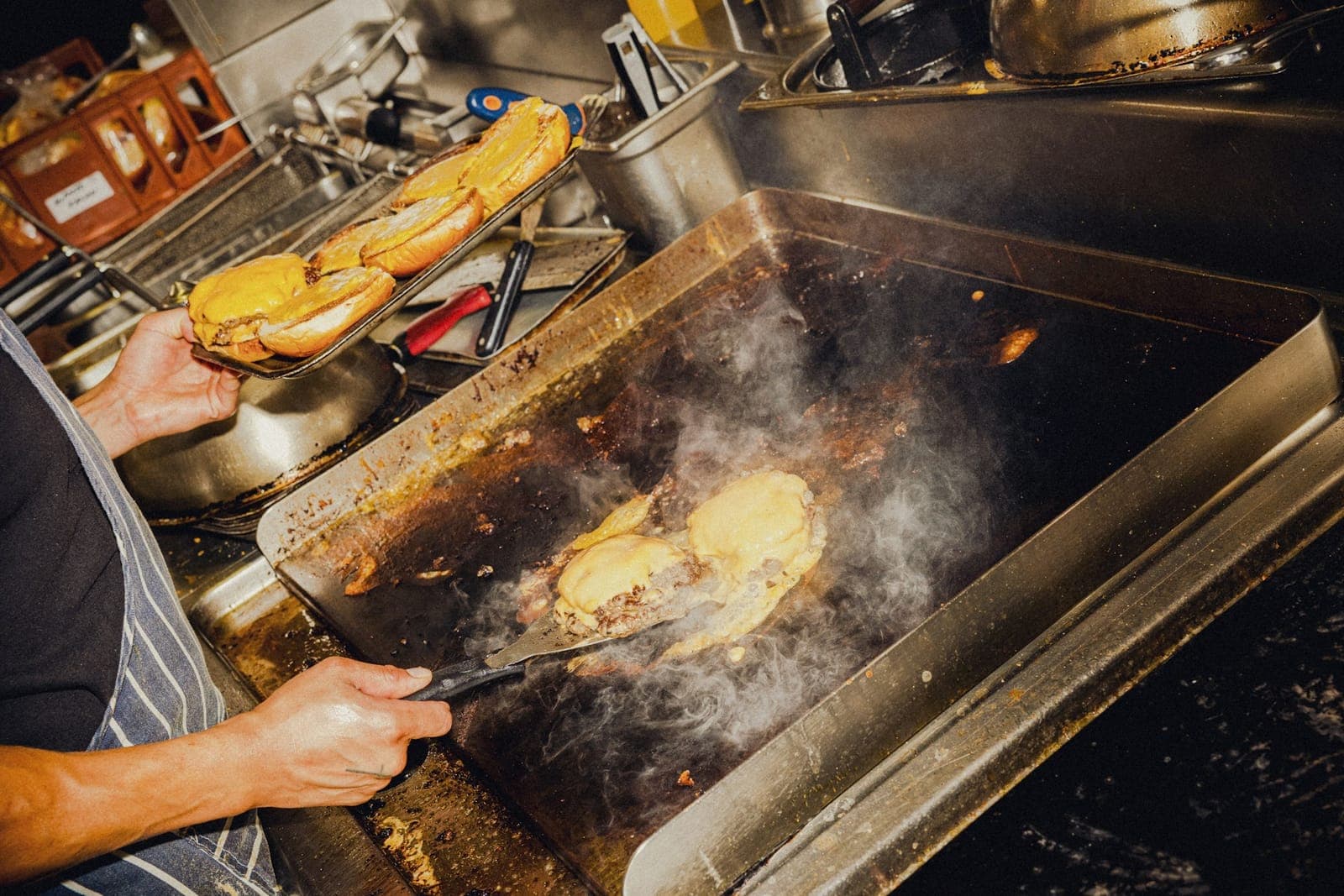
Scrape while it's hot. Push food debris and pooled grease forward into the grease trough with a metal scraper or chopper. Work in long strokes with the blade nearly flat; you're clearing residue, not gouging the seasoning.
Hit it with a little water. Squirt a few tablespoons from a squeeze bottle onto the warm surface. The sizzle is doing real work: steam lifts stuck-on bits the scraper slid over. Scrape the loosened residue into the trough. Small amounts only: dumping a cup of cold water on a screaming-hot 30-inch top is how thinner griddle plates end up warped.
Wipe it down. Fold a wad of paper towels, grab it with tongs, and wipe the whole surface, pushing water and grease into the trough. Two or three passes until the towel comes away mostly clean. Empty the grease cup while you're there; overflowing traps cause more patio messes than anything on the cooktop.
Let it dry completely. Residual heat evaporates the last of the moisture in a minute or two. This step matters more than it looks: water left sitting on carbon steel can start surface rust overnight, even under a cover.
Wipe on a thin film of oil. About half a teaspoon of canola, vegetable, or avocado oil, spread edge to edge with a paper towel until the surface barely shines. Thin is the whole game: a thick coat turns gummy instead of protective. This film is what stands between the steel and rust until your next cook.
Why hot cleaning beats hard cleaning
Every minute the surface cools roughly doubles the scrubbing later. Owners who report their cleanup takes “half an hour” are almost always cleaning a cold griddle the next morning. Done hot, steps 1–5 genuinely take five minutes, less time than the griddle took to preheat.
The Deep Clean (For Sticky, Patchy, or Flaking Surfaces)
Skip the routine for a few cooks and the surface tells on you: gummy patches where oil went on too thick, dull gray spots where seasoning wore through, black flakes lifting at the edges. None of it is fatal. A deep clean is just the daily routine with more muscle, and it takes about an hour including re-seasoning.
Heat the griddle on medium for ten minutes, then work in sections: water, scrape, wipe, repeat. For carbon buildup and gummy residue that laughs at the scraper, use a griddle brick (a pumice block that abrades burnt carbon without chewing deep into the seasoning), rubbing in circles on the warm surface with a little oil. Wipe, and keep wiping with fresh towels until they come away clean instead of black. It usually takes more rounds than you expect.
A deep clean always removes some seasoning along with the gunk; that's fine, seasoning is renewable. Finish with two or three thin coats of oil, heating each past its smoke point until it stops smoking (10–15 minutes a coat). Our griddle seasoning guide walks through the full layering process, including which oils polymerize best.
Rust Rescue: Bringing a Griddle Back From the Dead
Opened the cover in spring to an orange cooktop? Don't order a new griddle yet. Surface rust (even a full coating of it) comes off carbon steel with heat, abrasion, and patience.
Heat the griddle for 15–20 minutes to loosen the oxidation, then scrape the whole surface with your metal scraper. Pour on a few tablespoons of oil and scour with a griddle brick or steel wool, working in sections until the rust lifts into a gray-brown slurry. Wipe it off, and repeat the oil-scour-wipe cycle until towels come away clean. Then re-season from scratch: three to four thin coats, each heated until it stops smoking. The surface will look blotchy for the first few cooks; a couple of rounds of bacon and smash burgers evens it out faster than anything else.
The honest limit: if rust has eaten actual pits into the steel deep enough to catch a fingernail, you can still cook on it after a thorough rescue, but the surface will never be truly smooth again. Some models sell replacement griddle plates for less than half the price of a new unit; check that before browsing our flat-top griddle rankings for a full replacement.
Prevention is embarrassingly simple: dry completely, oil after every cook, and keep a fitted cover on it. It's the same discipline that keeps cast iron healthy; the routine we preach in our Dutch oven camping guide applies to every piece of seasoned steel and iron you own.
What Not to Use (and the Truth About Soap)
Let's deal with the big myth first. The internet will tell you soap on a griddle is a mortal sin. Honestly? A drop of mild dish soap in warm water won't hurt a well-seasoned griddle. The no-soap rule dates from when soap was made with lye, which really did strip seasoning. Modern dish soap is a gentle detergent, and polymerized seasoning is chemically bonded to the steel; it doesn't rinse off. You don't need soap (hot water and a scraper handle 95% of jobs), but after something like a fish cook, a quick soapy wipe, thorough rinse, full dry, and fresh oil film is completely fine.
What actually damages griddles:
- Soaking or hosing it down: standing water is the number-one rust cause in owner threads.
- Oven cleaner and harsh degreasers: these do strip seasoning to bare steel. They have exactly one use: a full strip-and-restart on a hopeless surface. Never for routine cleaning.
- Wire grill brushes: loose bristles ending up in food is a real, documented hazard, the same reason we steer people away from them in our charcoal grilling guide. A scraper and towels do the job with nothing to shed.
- Ice or cold water on a maxed-out surface: thermal shock can warp thinner plates. Let it cool to medium first; moderate heat plus water is the sweet spot.
- Thick coats of oil “for protection”: they don't polymerize, they go rancid and gummy. Thin enough to barely shine, every time.
The Cleaning Kit Worth Owning
You can clean a griddle with a spatula and paper towels, but a few purpose-built tools make the 5-minute routine actually take five minutes. Here's what earns a place in the cabinet, based on what griddle owners actually buy and keep using:
A scraper and squeeze bottles. The Blackstone 5-piece griddle toolkit (~$40) is the standard first purchase for a reason: two stainless spatulas, a chopper/scraper that doubles as your cleaning blade, and two 16-oz squeeze bottles (one for water, one for oil), which is the entire cleaning workflow in one box. Owner reviews are around 4.7 stars across a huge base; the one recurring gripe is that the plastic handles can soften if you leave a tool resting on a hot griddle edge.
A dedicated cleaning kit for deep cleans. The Blackstone 8-piece cleaning kit bundles griddle bricks, scouring pads, and a handle so your fingers stay away from a warm surface. Not needed weekly, but exactly what you want every few months.
Heat protection for hot cleaning. Since the whole method depends on working over a 300°F surface, a pair of RAPICCA heat-resistant gloves (~$23, rated to 932°F for brief contact) takes the flinch out of it. Honest caveat from owners: heat soaks through after 10+ seconds of continuous contact with hot metal, so they're for quick grabs and scraping, not resting your palm on the plate.
An infrared thermometer. A $16 Etekcity infrared thermometer gun tells you when the surface is in the safe-to-water zone, confirms your seasoning coats are getting past the oil's smoke point, and finds the 150°F hot-spot differences griddle owners report across big cooktops. It reads surface temps only (it's no substitute for a meat thermometer), but for griddle work it's the most useful $16 in outdoor cooking.
The Bottom Line
Scrape hot, sizzle a little water, wipe, dry, thin coat of oil. Five minutes, every cook, and your griddle's surface gets darker, slicker, and more nonstick every month you own it. The deep clean and the rust rescue both work; we'd just rather you never need them.
Starting from bare steel?
If your griddle is new (or you just stripped it back to gray), start with our step-by-step seasoning guide to build the surface this whole routine protects. And if you're still shopping (or replacing one that rusted past saving), our researched flat-top griddle picks compare the models whose plates and grease systems are easiest to live with long-term.