Why a Kamado Rewards a Little Technique
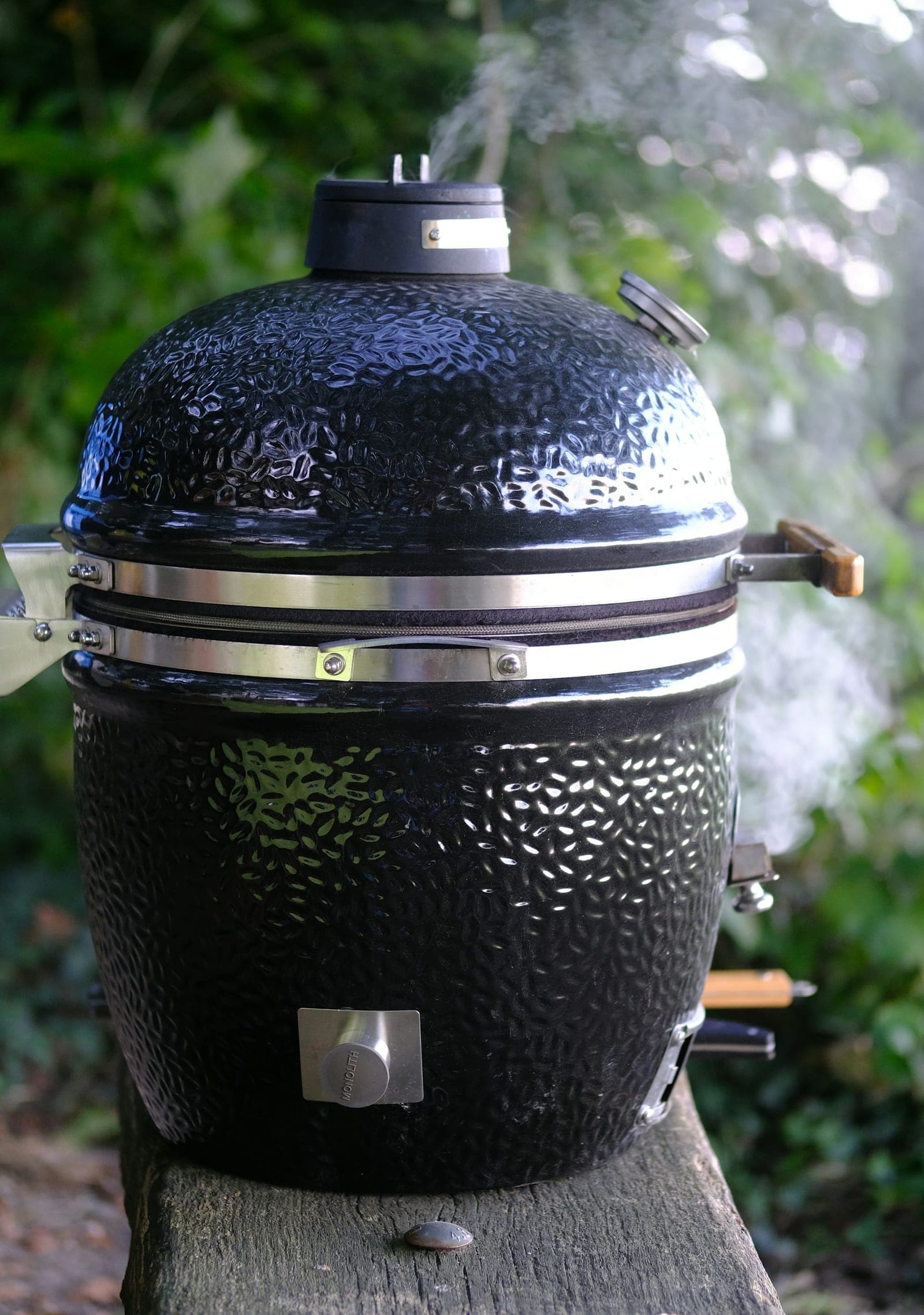
A kamado is a thick-walled ceramic egg with a fire in the bottom, and that thickness changes everything. The walls soak up heat and radiate it back evenly, so once the grill settles at a temperature it will sit there for hours with almost no attention; owners of the popular ceramic models routinely report 12-hour overnight smokes on a single load of charcoal. The same grill, vents wide open, will blow past 600°F for steakhouse searing. No other single cooker covers that range.
The trade-off is that ceramic has momentum. A kamado responds to vent changes slowly, holds whatever temperature you let it reach, and is genuinely stubborn about coming back down. Using one well is less about reacting and more about setting things up correctly from the start, which is exactly what this guide covers. If you're still shopping, our best kamado grills guide compares the ceramic heavyweights and the insulated-steel budget options; everything below applies to all of them.
Lump Charcoal Only: This One Isn't Optional
On a kettle grill, briquettes vs. lump is a friendly debate (we walk through it in our charcoal grilling guide). In a kamado, it's settled: natural lump charcoal only. Two reasons:
- Ash. Briquettes are pressed with binders and fillers that burn down to several times the ash of lump. On a long cook, that ash pile rises high enough to smother the bottom air intake, and your carefully stabilized fire slowly dies underneath a perfectly set vent.
- The ceramic remembers. A kamado's walls are porous. Additive smoke (and above all lighter fluid) soaks in and comes back out cook after cook. Never put lighter fluid anywhere near a ceramic grill; light it with a natural fire starter cube instead. There is no undo for a fluid-soaked kamado short of many long, sacrificial burns.
Lump also burns hotter and cleaner, which is what lets a kamado reach pizza-and-searing territory in the first place.
The Golden Rule: Creep Up, Never Chase Down
Here is the single concept that separates people who love their kamado from people who fight it: it is easy to raise a kamado's temperature and genuinely hard to lower it. Once the ceramic mass is hot, it radiates stored heat no matter what the vents say. Overshoot 250°F on your way to a rib cook and you can spend an hour watching the needle crawl back down, with the meat waiting on the counter.
So kamado cooks work the opposite way from gas grillers. You don't preheat wide open and then dial back. You set the vents for your target temperature from the moment the lid closes and let the grill drift up to the number slowly. Approaching 225°F over 30 unhurried minutes is a win. Hitting it in 10 minutes on the way to 400°F is how the evening goes sideways.
Lighting and Running a Kamado, Step by Step
Load the firebox. Fill it with lump charcoal to the top edge of the firebox, placing a few larger pieces at the bottom so small chips and ash can't clog the airflow holes. Reusing leftover lump from last time? Stir the pile so old ash falls through the grate, scoop the ash out of the base, and top up with fresh lump. Always load a full box; the vents decide how much actually burns, and whatever survives the cook is fuel for the next one.
Light one spot. Make a small divot in the center of the charcoal, nestle in a fire starter cube, and light it. Leave the lid open about 10 minutes until a fist-sized region of coals is established. One lit spot is right for low-and-slow; for a high-heat sear or pizza night, light two or three spots so the fire spreads faster. Resist the urge to get the whole bed roaring; a small fire is the point.
Set up direct or indirect now, while it's cool. For smoking, roasting, or baking, set the ceramic heat deflector plates in place beneath the cooking grate. For burgers and steaks, skip the deflectors and cook straight over the fire. Decide before the grill is hot: repositioning heavy ceramic plates over live coals with gloves on is nobody's favorite job.
Close the lid and set the vents for your target. Use the cheat sheet below. For a 225–250°F smoke, that's the bottom vent open about half an inch and the top vent barely cracked, tighter than feels reasonable. The grill will climb slowly on that little air, and slow is what you want.
Creep up on the number. Watch the dome thermometer as it climbs. When it reads 25–50°F below target, nudge the top vent slightly toward closed and let things settle. Make one small adjustment at a time and wait 10–15 minutes before judging it; ceramic answers slowly, and stacking corrections is how you overshoot. Once it's parked on your number, a good kamado will hold it for hours untouched.
Wait for clean smoke, then load the food. Fresh charcoal belches thick white smoke for the first 15–20 minutes, and it tastes as acrid as it looks. When the stream thins to nearly clear with a faint blue tint, the fire is clean; that's your signal. Add wood chunks for smoke flavor just before the food goes on.
Cook, verify, and shut down. Check doneness with an instant-read thermometer: 165°F for poultry, 160°F for ground meat, 145°F plus a three-minute rest for whole cuts of beef and pork, 145°F for fish (our thermometer guide covers where to probe). When you're done, close both vents fully. The fire suffocates, the leftover lump is saved for next time, and the only remaining job is patience: the ceramic shell stays seriously hot for hours, so don't touch it bare-handed or cover the grill until it's cold.
💨 White smoke is a wait signal, not a start signal
The most common first-cook mistake is loading meat into that thick white startup smoke. It coats food in a bitter, sooty film that no rub can hide. Give the fire its 15–20 minutes to burn clean (the faint-blue stage), and everything you cook will taste dramatically better. Low-and-slow barbecue lives and dies on this.
Vent Settings Cheat Sheet
Every kamado breathes through two openings: the bottom draft door (the throttle; it feeds the fire) and the top vent (the fine trim; it controls exhaust). These starting points are close on nearly every ceramic kamado; your grill's sweet spots will be within a nudge of them after two or three cooks.
| Target temp | Bottom vent | Top vent | Typical cooks |
|---|---|---|---|
| 225–250°F | Open ~½ inch | Barely cracked | Brisket, pork shoulder, ribs |
| 350°F | Open 1–2 inches | Quarter to half open | Roast chicken, baking, most grilling |
| 600°F+ | Wide open | Wide open | Searing steaks, pizza |
Two habits make the table work. First, steer with the top vent once you're within 50°F of target; it moves the temperature in smaller, more controllable increments than the draft door. Second, after any change, wait 10–15 minutes before making another. A kamado is a supertanker, not a speedboat; every input takes time to show up.
Burping the Dome: The Three Seconds That Save Your Eyebrows
A kamado cruising at low temperature is an oxygen-starved environment: plenty of superheated fuel and combustible gas, not enough air to burn it. Throw the dome wide open and you feed that starved fire a wall of oxygen all at once. The result can be flashback: a sudden burst of flame rolling out of the opening, right at face and forearm height.
The fix is called burping, and it's reflex-simple: lift the lid 2–3 inches, pause for two or three seconds while air bleeds in gradually, then open the rest of the way. Do it every single time the grill is above roughly 300°F, and always when the vents have been closed down. Long sleeves and heat-resistant gloves are cheap insurance for the moments you forget.
Indirect Cooking: Where the Kamado Earns Its Keep
Drop the ceramic heat deflector plates in and the kamado stops being a grill and becomes a convection smoker-oven. The plates block direct flame, heat circulates around the dome, and food cooks evenly in gentle radiant warmth with whatever smoke you've added. This is the setup for the entire low-and-slow canon: ribs, pork shoulder, and the full packer brisket walkthrough in our brisket smoking guide, where the target is that magic probe-tender finish around 203°F internal.
Kamados are arguably the most efficient low-and-slow cookers you can buy. The insulated shell means the fire barely sips fuel to hold 225°F; a full firebox commonly outlasts a 12-hour overnight cook with lump to spare, and owner reviews of the leading ceramics repeatedly confirm it. Compare that to tending a kettle every 45 minutes and you understand the cult following. It's also why a kamado shrugs off cold weather that cripples thin-walled smokers: the fire lives inside two inches of ceramic, not sheet metal. If you're weighing a kamado against a conventional kettle for your first charcoal cooker, our best charcoal grills guide lays out that decision honestly: the kettle is cheaper and lighter; the kamado holds temperature like nothing else.
🌡️ The dome gauge is a trend line, not the truth
Dome thermometers read the air at the top of the egg, which can run noticeably different from grate level, especially with deflectors in. Use the dome needle to judge which way the grill is drifting, and trust a probe at grate level (and an instant-read in the food) for real numbers. Our best meat thermometers guide has picks for both jobs.
Shutdown, Gasket Care, and Making It Last
Ending a cook is one move: close both vents completely and walk away. No water, ever; thermal shock is how ceramic cracks. The fire dies from oxygen starvation, and tomorrow you'll find a firebox of reusable lump under a little ash. Clear the ash from the base every few cooks with the ash tool so the bottom vent breathes freely.
The one wear item worth babying is the felt or fiberglass gasket: the ring where dome meets base that gives a kamado its airtight seal. Two habits protect it: don't slam the lid, and don't run extreme heat with the dome open or let a searing session rage on longer than it needs to, because sustained 700°F+ cooks are what scorch gaskets prematurely. A tired gasket shows up as temperature creep on long smokes: the grill slowly climbing past your setting because air is leaking in past the seal. Replacement gasket kits are inexpensive and an easy afternoon job, but a cared-for gasket lasts years. A cover, meanwhile, matters most on the budget steel kamados like the Char-Griller AKORN, where owner reviews are blunt that uncovered grills rust out years early, though ceramic appreciates one too.
🥚 Practice the boring cook first
Before you commit a $90 brisket, run one practice session with nothing on the grate: light it, creep to 250°F, hold for an hour, then open the vents and take it to 400°F. You'll learn your grill's vent personality in a single afternoon, and spatchcock chicken makes a forgiving first real cook; it's done at 165°F in the breast and hard to ruin.
Kamado Grill FAQ
Can I use briquettes in a kamado grill?
It's a bad idea. Briquettes are pressed with binders and fillers that produce several times the ash of lump (enough to choke the bottom airflow on a long cook), and their additive smoke soaks into the porous ceramic walls. Lighter fluid is even worse: the ceramic absorbs it and can flavor food for many cooks afterward. Natural lump charcoal burns hotter and cleaner, and it's the only fuel kamado manufacturers recommend.
Why is my kamado stuck at a high temperature?
Because the ceramic itself is hot now, and it radiates stored heat no matter what the vents do. Closing them down works, but slowly; expect 30–60 minutes or more for a serious overshoot to bleed off. This is exactly why kamado cooks creep: set the vents for your target from the start and never let the grill blow past the number you actually want.
What does burping a kamado grill mean?
Opening the lid in two stages: lift 2–3 inches, pause 2–3 seconds, then open fully. A kamado running with the vents choked down is starved of oxygen, and throwing the dome open feeds a rush of air to superheated fuel, which can ignite a fireball called flashback. Burp every time the grill is above roughly 300°F.
How long will a kamado hold 225°F on one load of charcoal?
A full firebox of lump in a quality ceramic commonly runs 12 hours or more; owners of the leading models routinely report overnight brisket cooks on a single load with fuel to spare. Close the vents at the end and whatever's left is next weekend's fuel.
Do I need the heat deflector plates?
For anything low-and-slow, roasted, or baked, yes. The plates turn the kamado into a convection oven and are the setup for ribs, shoulder, brisket, chicken, and pizza stones. For quick direct grilling like burgers and steaks, leave them out and cook straight over the coals.
How much charcoal should I load for a short cook?
Fill it anyway. A kamado burns only as much fuel as the vents allow, so a full firebox doesn't run hotter; it just burns steadier. When you close the vents at the end, the fire goes out and the remaining lump keeps. Loading light saves nothing and makes temperature holds less stable.